A Designer’s Take on “My Favorite Firefighter Calls Me Mom”
When a new design lands on my screen, my first instinct is to picture it not as a file, but as stitches. This is the lens I use for “My Favorite Firefighter Calls Me Mom SVG.” I’m looking at it not just as a graphic, but as a future embroidered product—something I might stitch for a client’s custom sweatshirt, a baby blanket for a shop, or a tote bag for a craft fair. That practical, real-world perspective is what I’ll share here.
The Immediate Mood and Visual Personality
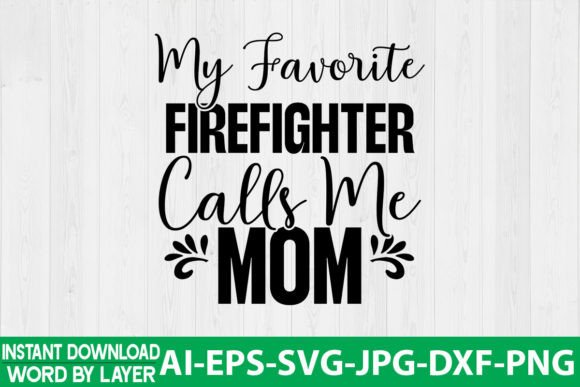
The design’s charm is immediate. It’s sentimental without being overly saccharine, and the layout feels balanced. The central phrase, “My Favorite Firefighter Calls Me Mom,” is the clear hero, with the supporting decorative elements framing it in a way that suggests a badge or a gentle emblem. This isn’t a loud, graphic shout; it’s a proud, personal statement. That personality tells me it belongs on items meant for close connection: personalized gifts, family-focused apparel, or boutique products celebrating service and family pride.
Thinking ahead to stitching, the shapes appear clean and the lettering looks well-proportioned. This is crucial. In embroidery, tiny, overly intricate script can become a muddy mess of thread. Here, the lettering seems sturdy enough to translate into clear satin or fill stitches, which is a relief for any embroidery project destined for real use.
Where This Design Shines in Real Projects
Let’s walk through a scenario. I’m preparing a custom order for a client—a cozy, heavyweight sweatshirt for a firefighter’s wife. She wants something heartfelt but not flashy. I load the “My Favorite Firefighter Calls Me Mom SVG” into my software and start visualizing. On a dark heather gray fabric, I imagine the design stitched in crisp white and red threads. The result would be a beautiful, wearable homage.
This design naturally extends beyond apparel. It would be perfect for a sturdy tote bag, a kitchen towel in a family home, or a decorative pillow cover. For small businesses and Etsy sellers, it could anchor a lovely line of “fire family” products: embroidered patches for jackets, simple designs on baby onesies, or even as a focal point on aprons. The emotional resonance is clear, which drives customer engagement and makes for a highly giftable finished product.
For commercial embroidery and digital product sellers, the included file formats—SVG, DXF, PNG, and EPS—are a practical advantage. They allow for flexibility in software use and creating high-quality mockups for listings. This adaptability supports brand consistency for a crafter building a themed shop.
Careful Considerations for Stitching Success
Even with a strong design, execution matters. My practical judgment flags a few areas to approach with care. First, the overall size. While the layout seems robust, I would not automatically shrink this design down for a small hoop size, like on a cap’s curved surface. The lettering and details need space to breathe. Testing on scrap fabric first is non-negotiable.
Texture is another factor. On very textured fabrics like some blankets, or on thin, stretchy materials, the clarity of those framed elements could soften. Using the correct stabilizer becomes paramount here. Also, if stitching on dark fabrics, I’d pay close attention to thread color contrast. A mockup in black and white helps plan that contrast before committing thread.
The potential for dense stitch areas exists in any design with filled shapes. I’d review the stitch density in my machine software to ensure it’s appropriate for the final fabric—a too-dense fill on a lightweight tee could make it stiff. For products that need frequent washing, like baby clothes or kitchen linens, a clean, not overly dense embroidery job will hold up better.
How This Embroidery File Elevates a Project
From a designer’s point of view, a good embroidery file does more than decorate; it adds value. “My Favorite Firefighter Calls Me Mom SVG,” when stitched well, enhances the product’s visual appeal through its clean sentiment. It boosts perceived value because customers recognize the thoughtfulness behind the theme. For a handmade business, that builds trust and professionalism.
It also affects the handmade presentation itself. A design with clear stitching lines and good proportions simply looks more professional when executed. This leads to better buyer engagement—people feel the emotion in the product, not just see a generic graphic. For creative entrepreneurs, that connection is everything.
Practical Notes Before You Hoop the Fabric
Before I’d run this embroidery file for a client project or a shop item, my checklist is straightforward. Test, test, test. Run a sample on a scrap of your intended fabric. Check the small details after stitching—are the corners clean, does the lettering read clearly?
Consider the final product’s use. Is it a decorative pillow or a frequently worn cap? That guides your stabilizer and thread choices. Always compare how the design looks in a light and dark fabric mockup to plan your thread palette.
Finally, a crucial step for any commercial use: confirm the licensing. The product description states the files are provided, but the terms for selling finished items or using the design in digital products must be clear. Never assume. Protecting your craft business starts with respecting design assets.
In essence, “My Favorite Firefighter Calls Me Mom SVG” strikes me as a design with strong emotional utility and good technical potential. It’s a graphic that begs to become a tangible, stitched tribute. For designers, crafters, and makers looking to create something meaningful, it’s a file worth exploring on the hoop, with the usual careful preparation that turns any good design into an excellent finished product.